Pregnancy & Obstetrics
High-Risk Pregnancy Care in Bangalore
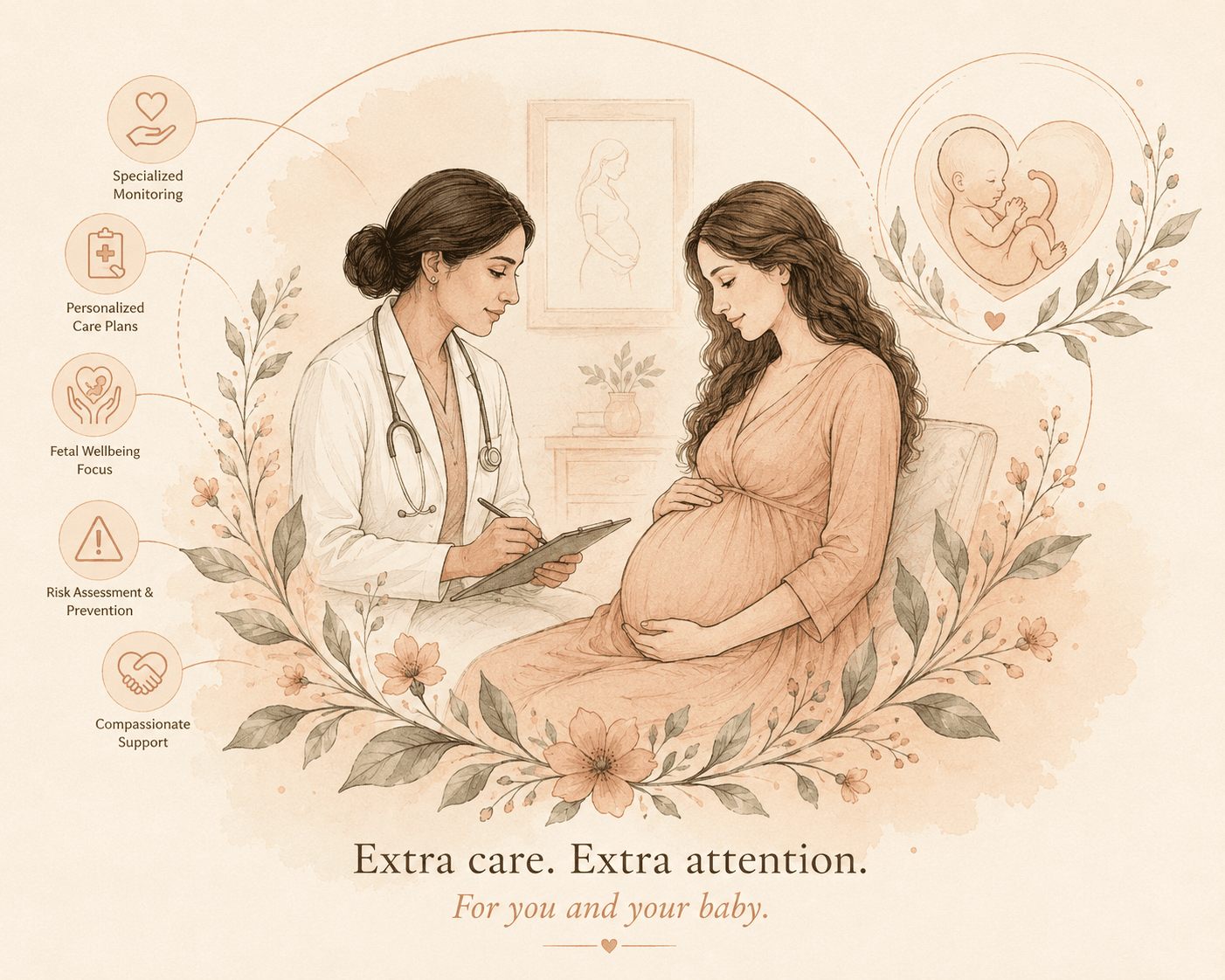
Some pregnancies need more frequent review because of maternal health conditions, prior pregnancy complications, or findings that arise during antenatal care. High-risk pregnancy management focuses on careful monitoring and clear communication at every step.
Consultation with Dr. Deepshika Jha at Grow and Glow Clinic, Kempapura, Hebbal and Cloudnine Hospitals, Sahakar Nagar.
Call or WhatsApp to speak with the clinic. Book an Appointment opens the online request form on this website.
Understanding this area of care
A clear overview to help you know what to expect before your consultation.
A pregnancy may be considered higher risk when factors such as gestational diabetes, hypertension, thyroid disorders, multiple pregnancy, advanced maternal age, previous preterm birth, or fetal growth concerns are present. This does not mean complications are inevitable — it means follow-up is tailored with additional assessments, coordinated investigations, and delivery planning that accounts for your specific situation. The goal is early recognition of changes and decisions made with full understanding of options.
Symptoms & concerns
Common patterns women describe — though every experience is individual.
- Persistent high blood pressure readings
- Uncontrolled blood sugar despite dietary changes
- Reduced fetal movements in the third trimester
- Premature contractions or cervical changes
- Significant swelling with headache or visual disturbance
Possible causes & context
Helpful background — a consultation helps clarify what applies to you.
- Pre-existing diabetes, hypertension, or thyroid disease
- Gestational diabetes or pregnancy-induced hypertension
- History of preterm birth, stillbirth, or recurrent miscarriage
- Multiple pregnancy (twins or more)
- Placental, fetal, or uterine conditions identified on scan
When should you seek care?
If any of the following apply, it is worth arranging a consultation.
- You have a medical condition and are planning or already pregnant
- A previous pregnancy had complications such as preterm delivery or preeclampsia
- Your current pregnancy has been flagged for closer follow-up
- Home blood pressure or glucose readings are persistently abnormal
- You notice reduced fetal movement, bleeding, or sudden severe symptoms
What a consultation may involve
Every visit is tailored — this is a general guide to what may be discussed.
Detailed review of medical, obstetric, and family history
Assessment of current pregnancy findings and risk factors
Planning for additional blood tests, scans, or specialist input when needed
Blood pressure, glucose, and symptom monitoring guidance
Discussion of delivery timing, mode, and hospital preparedness
Coordination with your broader antenatal team where appropriate
Treatment & management overview
Options depend on your history, examination findings, and preferences.
Management varies widely depending on the specific risk. Some women need more frequent visits and home monitoring; others require medication adjustment or planned early delivery. Care plans are reviewed regularly and adjusted as pregnancy evolves.
Frequently asked questions
Clear answers to common questions — for personal advice, please book a consultation.
What makes a pregnancy high risk?
What makes a pregnancy high risk?
Factors include maternal conditions like diabetes or hypertension, pregnancy complications such as preeclampsia, fetal growth concerns, multiple pregnancy, or significant prior obstetric history. The label helps guide monitoring — it is not a prediction of outcome.
Can I still have a normal delivery with a high-risk pregnancy?
Can I still have a normal delivery with a high-risk pregnancy?
Many high-risk pregnancies proceed to vaginal birth when clinically appropriate. The mode of delivery depends on the specific condition, fetal wellbeing, and how pregnancy progresses — this is discussed as your due date approaches.
How often will I need visits for high-risk pregnancy care?
How often will I need visits for high-risk pregnancy care?
Visit frequency is higher than routine antenatal care and depends on your condition. Some women are seen every one to two weeks; others may need weekly or more frequent review in the third trimester.
Will I need extra scans during a high-risk pregnancy?
Will I need extra scans during a high-risk pregnancy?
Additional ultrasound and Doppler assessments are often recommended to track fetal growth, amniotic fluid, and placental function. The exact schedule is based on clinical indications rather than a fixed protocol for everyone.
Related services

Pregnancy & Obstetrics
Pregnancy & Antenatal Care
Pregnancy brings physical changes, questions, and decisions that deserve steady medical support. Antenatal care helps monitor your wellbeing and your baby's development while giving you space to discuss concerns at each stage.
Explore →
Pregnancy & Obstetrics
Gestational Diabetes in Pregnancy
Gestational diabetes develops during pregnancy and usually resolves after delivery. Close antenatal monitoring helps protect both mother and baby while keeping care practical and understandable.
Explore →
Pregnancy & Obstetrics
Recurrent Miscarriage
Recurrent miscarriage is emotionally difficult and medically complex. Consultation offers space to review history carefully, discuss investigations when appropriate, and plan next steps with clarity and compassion.
Explore →
Pregnancy & Obstetrics
Normal Delivery
Many women hope for a vaginal birth and want to understand what labour involves, how to prepare, and when medical intervention may be needed. Consultation covers birth planning with realistic expectations rather than promises about outcome.
Explore →
Pregnancy & Obstetrics
Postpartum & Postnatal Care
The weeks after delivery bring physical recovery, feeding adjustments, sleep disruption, and emotional change. Postpartum care supports recovery and flags concerns that need prompt attention.
Explore →
Serving women across North Bengaluru
Consultation is available from nearby neighbourhoods across North Bangalore — without separate clinic addresses in every area.
Hebbal
Women in Hebbal and nearby North Bangalore neighbourhoods often look for a gynecologist who listens carefully and explains options clearly. Dr. Deepshika Jha consults at Grow and Glow Clinic, Kempapura, Hebbal, offering obstetric and gynecological care for patients across the area.
View area →Sahakar Nagar
Sahakar Nagar and Kodigehalli residents often search for a trusted gynecologist within their neighbourhood. Dr. Deepshika Jha consults at Cloudnine Hospitals, Sahakar Nagar, and also at Grow and Glow Clinic, Kempapura, Hebbal — covering antenatal care, gynecology, and women's wellness.
View area →North Bangalore
North Bangalore spans Hebbal, Sahakar Nagar, RT Nagar, Sanjaynagar, Nagavara, Manyata Tech Park, Jakkur, HBR Layout, and many surrounding neighbourhoods. Dr. Deepshika Jha consults at Grow and Glow Clinic, Kempapura, Hebbal and Cloudnine Hospitals, Sahakar Nagar.
View area →RT Nagar
Dr. Deepshika Jha consults in RT Nagar at Dr. Megha's Baby & Child Care, where she has a dedicated consultation room, a separate consultation service, and her own patient base. Morning and evening slots are available through the week, with Sunday hours as well. During the day she also continues consultations at Grow and Glow Clinic, Kempapura, Hebbal and Cloudnine Hospitals, Sahakar Nagar.
View area →
Appointments
Book a consultation for high-risk pregnancy
Request an appointment with Dr. Deepshika Jha for high-risk pregnancy consultation in Bangalore — online, by phone, or WhatsApp.
Call or WhatsApp to speak with the clinic. Book an Appointment opens the online request form on this website.
Medical disclaimer
Information on this page is for general education and does not replace an in-person consultation with a qualified medical professional. It is not intended to diagnose, treat, cure, or prevent any condition. Symptoms and treatment options vary between individuals.