Minimally invasive surgical care
Laparoscopic Gynecology & Minimally Invasive Care in Bangalore
Laparoscopic or keyhole gynecological surgery may be considered for certain conditions when clinically appropriate. Whether it is suitable depends on individual clinical circumstances, not a one-size-fits-all rule.
Dr. Deepshika Jha, Consultant Obstetrician & Gynaecologist at Cloudnine Hospital, Sahakar Nagar, Bangalore, offers laparoscopic gynecology consultation to help determine the most appropriate approach for your diagnosis and goals.
Call or WhatsApp for a direct conversation. Book Appointment opens Dr. Deepshika's Cloudnine profile.
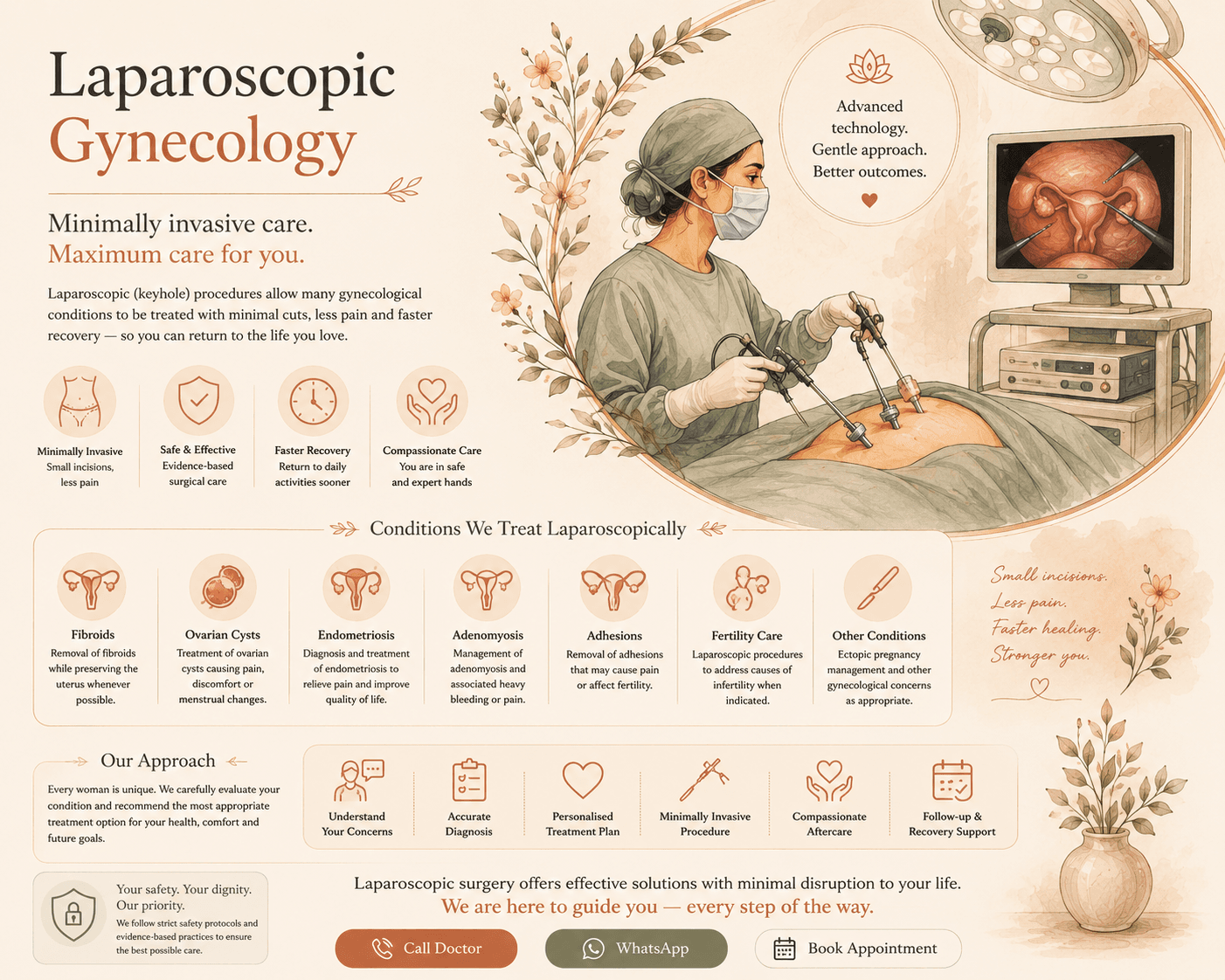
What is laparoscopic gynecology?
Laparoscopic gynecology is a surgical approach often called keyhole surgery. It generally uses small incisions, a camera, and specialised instruments to perform selected gynecological procedures.
Minimally invasive surgery in Bangalore may be appropriate in selected cases, but suitability always depends on the condition, findings, and overall clinical assessment.
When may laparoscopic surgery be considered?
Laparoscopic surgery in Bangalore may be discussed in selected situations such as:
- Selected uterine fibroid cases
- Selected ovarian cyst cases
- Endometriosis where surgical evaluation may be relevant
- Adenomyosis in selected clinical situations
- Pelvic adhesions
- Selected infertility-related procedures
- Other gynecological conditions where minimally invasive surgery may be clinically appropriate
These are examples for education only. They do not mean every patient with these conditions needs laparoscopic surgery.
Potential advantages in suitable cases
For suitable patients, minimally invasive gynecological surgery may offer:
- Smaller incisions
- Potentially less postoperative discomfort
- Shorter hospital stay in some procedures
- Earlier return to routine activities in some cases
Recovery varies by procedure and by patient. No surgical approach can guarantee a particular recovery pattern for everyone.
When open surgery or another approach may be more appropriate
Laparoscopic gynecology is not automatically the best option in every case. The recommended approach depends on factors such as:
- The condition and diagnosis
- Severity and extent of disease
- Individual anatomy
- Previous surgeries
- Medical history
- Reproductive goals
- Surgeon assessment
- Facility considerations
The goal is choosing the safest and most appropriate route for you, rather than applying one method to all patients.
Conditions commonly discussed in laparoscopic gynecology
Fibroids
Laparoscopic treatment for fibroids may be discussed when size, location, symptoms, and reproductive goals make this route appropriate.
Ovarian cysts
Some ovarian cysts may be managed laparoscopically in selected cases; others are observed or managed differently depending on clinical findings.
Endometriosis
Endometriosis laparoscopic treatment may be considered when symptoms and assessment suggest that surgery could be helpful as part of an overall care plan.
Adenomyosis
In selected adenomyosis situations, surgical options may be discussed after evaluating symptom burden, age, and goals.
Pelvic adhesions
Pelvic adhesions can be considered in surgical planning when they are relevant to pain, symptoms, or fertility-related concerns.
Selected fertility-related procedures
Some infertility-related procedures may involve laparoscopic surgery when appropriate. For broader fertility evaluation, see infertility and fertility care.
What happens during a consultation?
A laparoscopic gynecology consultation usually starts with understanding your concerns. Depending on your case, discussion may include:
- Understanding symptoms and concerns
- Reviewing medical and surgical history
- Reviewing previous reports or imaging where relevant
- Discussing diagnosis and treatment options
- Determining whether laparoscopic surgery is appropriate
- Explaining expected recovery and follow-up when surgery is planned
Not every patient requires surgery. The consultation is to decide what approach is clinically appropriate for your situation.
Recovery and follow-up
Recovery after gynecological laparoscopic surgery depends on the exact procedure, your overall health, and whether complications occur.
Your doctor will explain expected recovery milestones, warning signs, and follow-up planning if surgery is advised. Timelines are individual and should not be assumed from a generic guide.
Individualised surgical care
Surgical planning is individualised and based on informed decision-making. Care typically includes:
- Safety-first clinical decision-making
- Clear, informed discussion of options
- Respect for patient preferences
- Consideration of reproductive goals
- Appropriate planning for follow-up
If your concerns are broader menstrual or pelvic symptoms, you may also find gynecological conditions and women's health care and PCOS treatment and care useful for context.
Frequently asked questions
What is laparoscopic gynecological surgery?
Laparoscopic gynecological surgery, often called keyhole surgery, is a minimally invasive approach using small incisions, a camera, and specialised instruments. It may be considered in selected cases after clinical assessment.
What conditions can be treated with laparoscopic surgery?
Depending on individual circumstances, laparoscopic gynecology may be discussed for selected fibroids, ovarian cysts, endometriosis, adhesions, some adenomyosis-related situations, and selected fertility-related procedures. Not every condition requires surgery.
Is laparoscopic surgery suitable for fibroids?
In some patients, laparoscopic treatment for fibroids may be appropriate. Suitability depends on fibroid size, number, location, symptoms, and reproductive goals, along with the surgeon’s clinical assessment.
Can ovarian cysts be treated laparoscopically?
Some ovarian cysts can be managed laparoscopically in selected cases. Others may be observed, or may need a different approach. A consultation helps determine what is suitable in your clinical context.
Is laparoscopic surgery used for endometriosis?
Laparoscopic surgery may be used in selected endometriosis cases for diagnosis or treatment planning, depending on symptoms and findings. Endometriosis laparoscopic treatment is individualised and not required for everyone.
Is laparoscopic surgery always better than open surgery?
No single approach is best for every patient. In some situations, laparoscopic surgery may offer advantages, while in others open surgery or another approach may be safer or more appropriate.
What happens during a laparoscopic gynecology consultation?
A laparoscopic gynecology consultation usually includes review of symptoms, medical and surgical history, prior reports where relevant, and a discussion of diagnosis and management options. Surgery is considered only when clinically appropriate.
How long does recovery take after laparoscopic surgery?
Recovery depends on the procedure performed, your overall health, and whether complications occur. Some people return to routine activities sooner than with open surgery, but timelines vary and are discussed individually.
Educational disclaimer
This page offers general educational information about laparoscopic gynecology and minimally invasive care in Bangalore. It does not diagnose conditions, prescribe treatment, guarantee outcomes, or replace consultation with a qualified medical professional. For personal medical advice, please consult Dr. Deepshika Jha or another appropriately qualified clinician.
Return to the Dr. Deepshika Jha website or explore areas of care.
Appointments
Discuss laparoscopic options with clear guidance
Reach out for a laparoscopic gynecology consultation with Dr. Deepshika Jha at Cloudnine Hospital, Sahakar Nagar, Bangalore.
Call Doctor and WhatsApp connect you directly. Book Appointment opens the Cloudnine booking profile.