Periods & Hormonal Health
Menstrual & Period Problems in Bangalore
Periods that are too heavy, too painful, or too unpredictable can disrupt daily life. Menstrual problems are among the most common reasons women seek gynecological care — and most have treatable causes.
Consultation with Dr. Deepshika Jha at Grow and Glow Clinic, Kempapura, Hebbal and Cloudnine Hospitals, Sahakar Nagar.
Call or WhatsApp to speak with the clinic. Book an Appointment opens the online request form on this website.
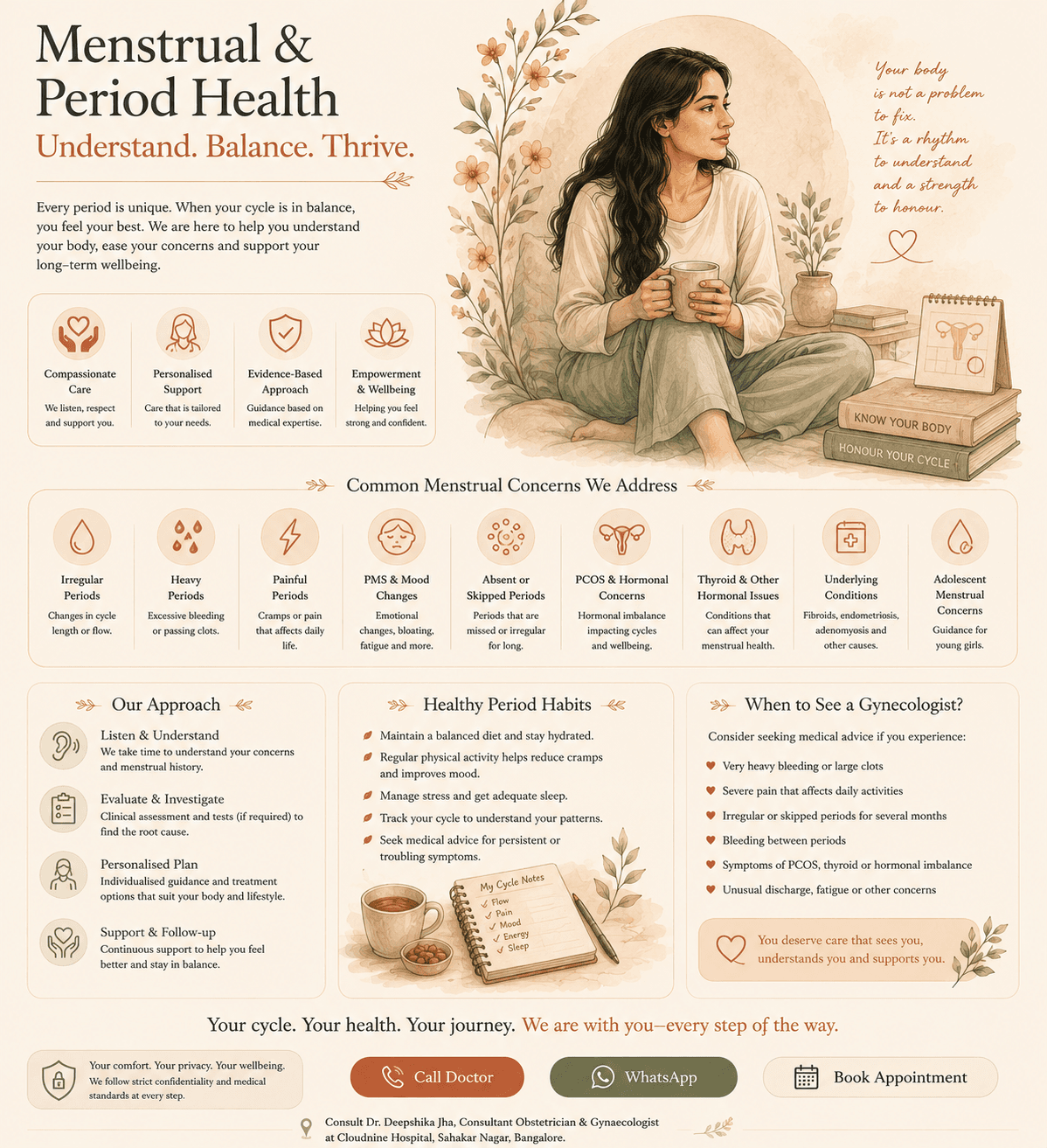
Understanding this area of care
A clear overview to help you know what to expect before your consultation.
Menstrual health reflects the interplay of hormones, uterine lining, and sometimes structural conditions in the pelvis. Problems may present as heavy bleeding (menorrhagia), painful periods (dysmenorrhoea), irregular cycles, bleeding between periods, or absence of periods (amenorrhoea). Evaluation includes menstrual history, examination, and investigations such as blood tests for anemia and thyroid function, and pelvic ultrasound. Treatment ranges from simple pain relief and iron supplementation to hormonal regulation or surgical options for structural causes like fibroids or polyps.
Symptoms & concerns
Common patterns women describe — though every experience is individual.
- Heavy bleeding soaking through protection in an hour or two
- Severe cramping pain before or during periods
- Cycles shorter than 21 days or longer than 35 days
- Bleeding or spotting between regular periods
- Missing periods for three or more months (when not pregnant)
- Fatigue or dizziness during or after periods
Possible causes & context
Helpful background — a consultation helps clarify what applies to you.
- Hormonal imbalance affecting ovulation and lining shedding
- Fibroids, polyps, or adenomyosis in the uterus
- PCOS or thyroid disorders
- Endometriosis causing painful periods
- Bleeding disorders or anticoagulant medication (less common)
- Perimenopause in women in their 40s and 50s
When should you seek care?
If any of the following apply, it is worth arranging a consultation.
- Period pain prevents normal activities despite over-the-counter pain relief
- Bleeding is heavy enough to cause anemia symptoms such as fatigue
- Your cycle pattern has changed significantly from your usual
- You bleed between periods or after intercourse
- Periods have stopped and pregnancy has been excluded
What a consultation may involve
Every visit is tailored — this is a general guide to what may be discussed.
Detailed menstrual diary review — cycle length, flow, and pain
Assessment for anemia and its symptoms
Abdominal and pelvic examination
Pelvic ultrasound when structural causes are suspected
Blood tests for hormones, thyroid, and iron studies when indicated
Individualised treatment plan aligned with your symptoms and fertility plans
Treatment & management overview
Options depend on your history, examination findings, and preferences.
NSAIDs and tranexamic acid help many women with pain and heavy bleeding. Hormonal contraception regulates cycles and reduces flow. Structural causes may need hysteroscopic polyp removal, Mirena insertion, or surgery for fibroids when medical options are insufficient.
Frequently asked questions
Clear answers to common questions — for personal advice, please book a consultation.
How much bleeding is considered normal during a period?
How much bleeding is considered normal during a period?
Normal blood loss is roughly 30–80 ml over three to seven days. Soaking through a pad or tampon every one to two hours, passing large clots, or bleeding longer than a week suggests heavier-than-normal flow worth evaluating.
Are painful periods always normal?
Are painful periods always normal?
Mild cramping is common, but pain that regularly limits activities, requires strong painkillers, or worsens over time may indicate endometriosis, adenomyosis, or fibroids and deserves investigation.
Can stress cause period problems?
Can stress cause period problems?
Significant stress, weight change, and intense exercise can disrupt ovulation and alter bleeding patterns. However, persistent changes should be evaluated to exclude underlying hormonal or structural causes.
Will I need a hysterectomy for heavy periods?
Will I need a hysterectomy for heavy periods?
Hysterectomy is reserved for cases where other treatments have failed or when there is a clear structural indication. Most heavy bleeding is managed with medication or less invasive procedures first.
Related services
Periods & Hormonal Health
Heavy Periods
Heavy periods can affect daily life, energy, and confidence. If bleeding feels excessive, lasts too long, or leaves you unusually tired, a gynecological review can help identify causes and options.
Explore →
Periods & Hormonal Health
Painful Periods
Some cramping during periods can be common, but pain that regularly stops you from working, studying, or resting is not something you should simply accept without review.
Explore →
Periods & Hormonal Health
Irregular Periods
Irregular periods can mean cycles that come too often, too rarely, or unpredictably. They are common — and they deserve a thoughtful evaluation rather than being dismissed as stress alone.
Explore →

Periods & Hormonal Health
PCOS / PCOD
Polycystic ovary syndrome (PCOS) affects how the ovaries work and can influence periods, skin, weight, and fertility. It is common — and manageable with a plan tailored to your symptoms and goals.
Explore →

Gynecology
Fibroids & Uterine Conditions
Fibroids are common non-cancerous growths of the uterus. Many cause no symptoms; others may affect bleeding, comfort, or fertility. Care should match the fibroid, your symptoms, and your plans.
Explore →
Serving women across North Bengaluru
Consultation is available from nearby neighbourhoods across North Bangalore — without separate clinic addresses in every area.
Hebbal
Women in Hebbal and nearby North Bangalore neighbourhoods often look for a gynecologist who listens carefully and explains options clearly. Dr. Deepshika Jha consults at Grow and Glow Clinic, Kempapura, Hebbal, offering obstetric and gynecological care for patients across the area.
View area →Sahakar Nagar
Sahakar Nagar and Kodigehalli residents often search for a trusted gynecologist within their neighbourhood. Dr. Deepshika Jha consults at Cloudnine Hospitals, Sahakar Nagar, and also at Grow and Glow Clinic, Kempapura, Hebbal — covering antenatal care, gynecology, and women's wellness.
View area →North Bangalore
North Bangalore spans Hebbal, Sahakar Nagar, RT Nagar, Sanjaynagar, Nagavara, Manyata Tech Park, Jakkur, HBR Layout, and many surrounding neighbourhoods. Dr. Deepshika Jha consults at Grow and Glow Clinic, Kempapura, Hebbal and Cloudnine Hospitals, Sahakar Nagar.
View area →RT Nagar
Dr. Deepshika Jha consults in RT Nagar at Dr. Megha's Baby & Child Care, where she has a dedicated consultation room, a separate consultation service, and her own patient base. Morning and evening slots are available through the week, with Sunday hours as well. During the day she also continues consultations at Grow and Glow Clinic, Kempapura, Hebbal and Cloudnine Hospitals, Sahakar Nagar.
View area →
Appointments
Book a consultation for menstrual & period problems
Request an appointment with Dr. Deepshika Jha for menstrual & period problems consultation in Bangalore — online, by phone, or WhatsApp.
Call or WhatsApp to speak with the clinic. Book an Appointment opens the online request form on this website.
Medical disclaimer
Information on this page is for general education and does not replace an in-person consultation with a qualified medical professional. It is not intended to diagnose, treat, cure, or prevent any condition. Symptoms and treatment options vary between individuals.