Pregnancy & Obstetrics
Genetic Counselling in Pregnancy
Pregnancy screening and genetic testing options have expanded, but they can feel overwhelming. Genetic counselling in pregnancy helps clarify what tests offer, what they cannot show, and how results may influence care.
Consultation with Dr. Deepshika Jha at Grow and Glow Clinic, Kempapura, Hebbal and Cloudnine Hospitals, Sahakar Nagar.
Call or WhatsApp to speak with the clinic. Book an Appointment opens the online request form on this website.

Understanding this area of care
A clear overview to help you know what to expect before your consultation.
Consultation covers first- and second-trimester screening, non-invasive prenatal testing (NIPT), diagnostic procedures such as amniocentesis or chorionic villus sampling when referred, and counselling when structural anomalies or family history raise concern. The aim is informed decision-making — tests are optional, and no screening detects every condition. Care is integrated with antenatal visits at Grow and Glow Clinic, Kempapura, Hebbal and Cloudnine Hospitals, Sahakar Nagar, with referral to fetal medicine or clinical genetics specialists when advanced testing or discussion is needed.
Symptoms & concerns
Common patterns women describe — though every experience is individual.
- Not typically symptom-based — counselling is proactive or follow-up to results
- Family history of genetic or chromosomal conditions
- Advanced maternal age prompting screening discussion
- Abnormal screening blood test or ultrasound finding
- Consanguinity or known carrier status for inherited conditions
Possible causes & context
Helpful background — a consultation helps clarify what applies to you.
- Maternal age-associated chromosomal risk
- Family history of inherited disorders
- Prior pregnancy with chromosomal or structural anomaly
- Carrier screening identifying parental carrier status
- Ultrasound findings suggesting further evaluation
When should you seek care?
If any of the following apply, it is worth arranging a consultation.
- Early pregnancy to discuss screening options and timing
- Abnormal first-trimester or NIPT result needing explanation
- Family history of genetic disease before or during pregnancy
- Ultrasound suggests structural anomaly or soft markers
- You are unsure whether to proceed with diagnostic testing
What a consultation may involve
Every visit is tailored — this is a general guide to what may be discussed.
Explanation of available screening versus diagnostic tests
Discussion of conditions each test can and cannot detect
Review of family and obstetric history relevant to genetic risk
Support interpreting results without undue alarm or false reassurance
Referral for fetal medicine, genetics, or diagnostic procedures when indicated
Coordination with ongoing antenatal care and delivery planning
Treatment & management overview
Options depend on your history, examination findings, and preferences.
Screening tests estimate risk; diagnostic tests confirm chromosomal or genetic conditions in selected cases. If a condition is identified, care focuses on understanding implications, additional fetal assessment, and planning support — including referral to paediatric or surgical specialists when appropriate. Declining testing is respected; care continues with standard antenatal monitoring.
Frequently asked questions
Clear answers to common questions — for personal advice, please book a consultation.
What is the difference between screening and diagnostic tests?
What is the difference between screening and diagnostic tests?
Screening tests such as NIPT estimate the chance of certain chromosomal conditions; they are not definitive. Diagnostic tests such as amniocentesis analyse fetal cells and can confirm or exclude specific diagnoses, but carry a small procedure-related risk.
Does a high-risk screening result mean my baby has a problem?
Does a high-risk screening result mean my baby has a problem?
No. High-risk screening means further discussion and possibly diagnostic testing is offered. Many high-risk screening results are followed by normal diagnostic tests.
When should I discuss genetic screening in pregnancy?
When should I discuss genetic screening in pregnancy?
Ideally in the first trimester so timing for NIPT, combined screening, or early structural scans can be planned. It is not too late to discuss options in later pregnancy if you have not done so earlier.
Is genetic counselling only for older mothers?
Is genetic counselling only for older mothers?
No. Age is one factor, but family history, prior affected pregnancies, ultrasound findings, and carrier screening results also prompt counselling at any maternal age.
Related services
Pregnancy & Obstetrics
Pregnancy & Antenatal Care
Pregnancy brings physical changes, questions, and decisions that deserve steady medical support. Antenatal care helps monitor your wellbeing and your baby's development while giving you space to discuss concerns at each stage.
Explore →
Pregnancy & Obstetrics
Preconception Counselling
Planning pregnancy is not only about timing. A preconception visit helps review medical history, medications, lifestyle, and any factors that may benefit from attention before you conceive.
Explore →
Pregnancy & Obstetrics
High-Risk Pregnancy
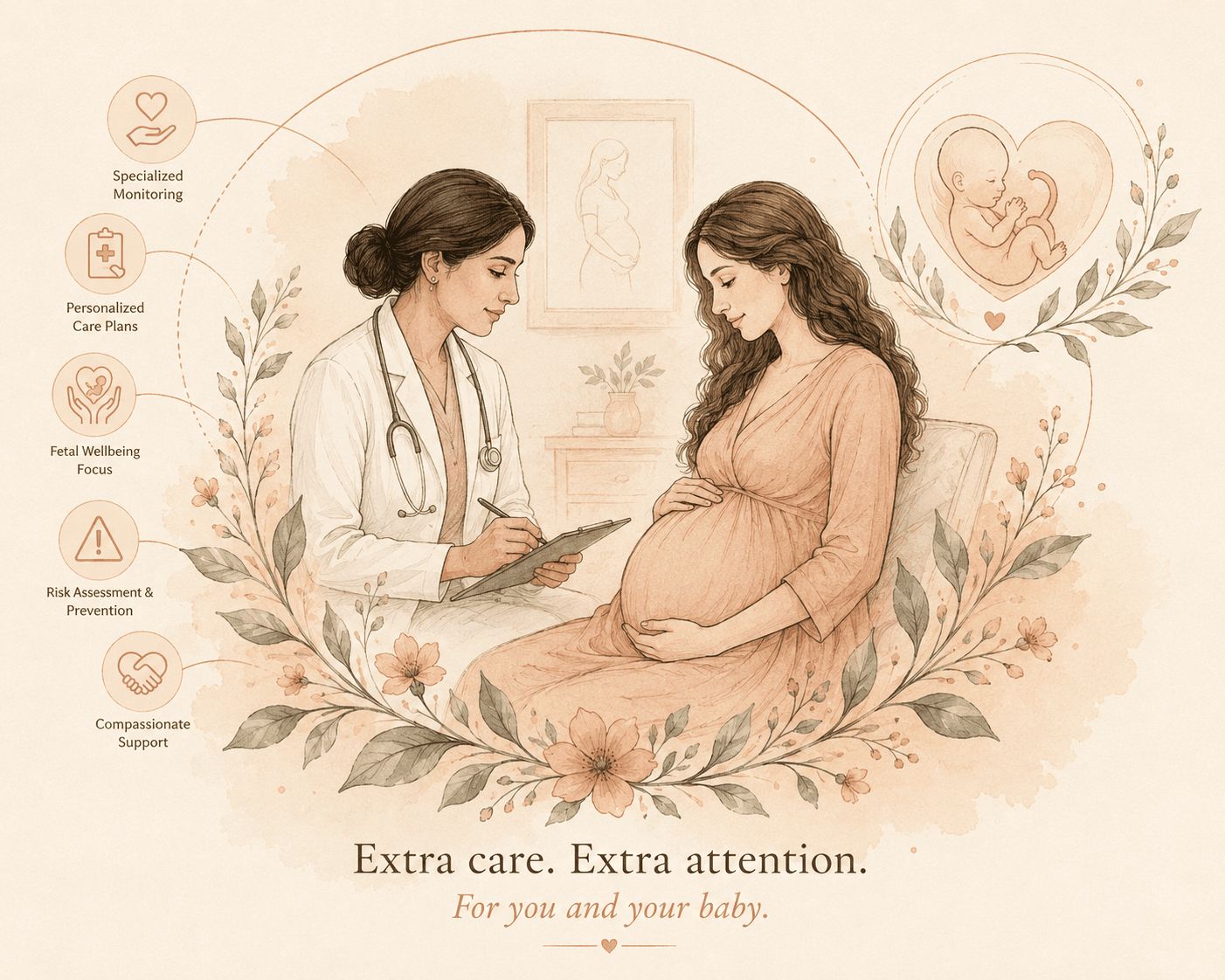
Some pregnancies need more frequent review because of maternal health conditions, prior pregnancy complications, or findings that arise during antenatal care. High-risk pregnancy management focuses on careful monitoring and clear communication at every step.
Explore →
Pregnancy & Obstetrics
Recurrent Miscarriage
Recurrent miscarriage is emotionally difficult and medically complex. Consultation offers space to review history carefully, discuss investigations when appropriate, and plan next steps with clarity and compassion.
Explore →
Pregnancy & Obstetrics
IUGR / Fetal Growth Restriction
Fetal growth restriction, sometimes called IUGR (intrauterine growth restriction), means the baby is not growing at the expected rate for gestational age. It requires careful monitoring to balance continuing pregnancy with timely delivery when needed.
Explore →
Serving women across North Bengaluru
Consultation is available from nearby neighbourhoods across North Bangalore — without separate clinic addresses in every area.
Hebbal
Women in Hebbal and nearby North Bangalore neighbourhoods often look for a gynecologist who listens carefully and explains options clearly. Dr. Deepshika Jha consults at Grow and Glow Clinic, Kempapura, Hebbal, offering obstetric and gynecological care for patients across the area.
View area →Sahakar Nagar
Sahakar Nagar and Kodigehalli residents often search for a trusted gynecologist within their neighbourhood. Dr. Deepshika Jha consults at Cloudnine Hospitals, Sahakar Nagar, and also at Grow and Glow Clinic, Kempapura, Hebbal — covering antenatal care, gynecology, and women's wellness.
View area →North Bangalore
North Bangalore spans Hebbal, Sahakar Nagar, RT Nagar, Sanjaynagar, Nagavara, Manyata Tech Park, Jakkur, HBR Layout, and many surrounding neighbourhoods. Dr. Deepshika Jha consults at Grow and Glow Clinic, Kempapura, Hebbal and Cloudnine Hospitals, Sahakar Nagar.
View area →RT Nagar
Dr. Deepshika Jha consults in RT Nagar at Dr. Megha's Baby & Child Care, where she has a dedicated consultation room, a separate consultation service, and her own patient base. Morning and evening slots are available through the week, with Sunday hours as well. During the day she also continues consultations at Grow and Glow Clinic, Kempapura, Hebbal and Cloudnine Hospitals, Sahakar Nagar.
View area →
Appointments
Book a consultation for genetic counselling in pregnancy
Request an appointment with Dr. Deepshika Jha for genetic counselling in pregnancy consultation in Bangalore — online, by phone, or WhatsApp.
Call or WhatsApp to speak with the clinic. Book an Appointment opens the online request form on this website.
Medical disclaimer
Information on this page is for general education and does not replace an in-person consultation with a qualified medical professional. It is not intended to diagnose, treat, cure, or prevent any condition. Symptoms and treatment options vary between individuals.