Periods & Hormonal Health
Menopause & Midlife Health in Bangalore
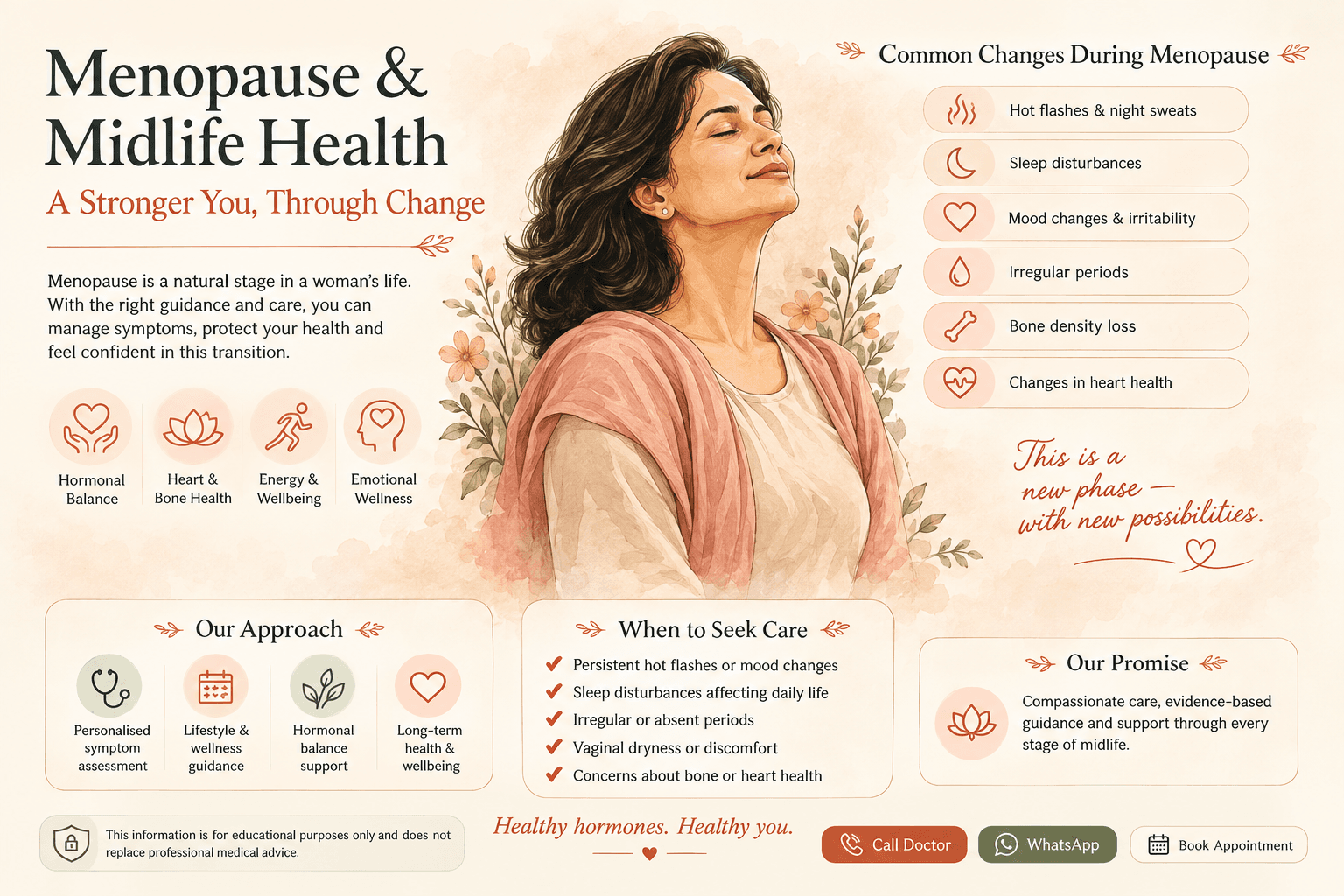
Menopause is a natural transition, but symptoms such as hot flashes, sleep disruption, and mood changes can affect quality of life. Midlife health consultation addresses these changes and broader wellbeing during the perimenopause and beyond.
Consultation with Dr. Deepshika Jha at Grow and Glow Clinic, Kempapura, Hebbal and Cloudnine Hospitals, Sahakar Nagar.
Call or WhatsApp to speak with the clinic. Book an Appointment opens the online request form on this website.
Understanding this area of care
A clear overview to help you know what to expect before your consultation.
Menopause is defined as twelve consecutive months without a period, typically occurring between ages 45 and 55. The years leading up to it — perimenopause — often bring irregular cycles, heavier or lighter bleeding, vasomotor symptoms (hot flashes and night sweats), vaginal dryness, sleep disturbance, and mood fluctuations. These changes result from declining ovarian oestrogen production. Management is individualised: some women need only reassurance and lifestyle support; others benefit from hormone replacement therapy (HRT), non-hormonal medications, or local oestrogen for vaginal symptoms. Bone health, cardiovascular risk, and screening schedules are also part of midlife care.
Symptoms & concerns
Common patterns women describe — though every experience is individual.
- Hot flashes and night sweats
- Irregular or changing periods during perimenopause
- Sleep difficulty or waking unrefreshed
- Vaginal dryness or discomfort during intercourse
- Mood changes, irritability, or low energy
- Joint aches and reduced concentration
Possible causes & context
Helpful background — a consultation helps clarify what applies to you.
- Natural decline in ovarian oestrogen and progesterone production
- Surgical menopause after bilateral oophorectomy
- Chemotherapy or radiation affecting ovarian function
- Primary ovarian insufficiency (premature menopause before age 40)
When should you seek care?
If any of the following apply, it is worth arranging a consultation.
- Hot flashes or night sweats are disrupting sleep or daily comfort
- Periods become very irregular, heavy, or have not occurred for several months
- Vaginal dryness or pain is affecting sexual wellbeing
- You are under 45 and experiencing menopausal symptoms
- You want to discuss HRT benefits and risks for your situation
- Bleeding occurs after twelve months without a period
What a consultation may involve
Every visit is tailored — this is a general guide to what may be discussed.
Review of menstrual changes and menopausal symptoms
Assessment of bone health, cardiovascular risk, and family history
Examination and investigations when clinically indicated
Discussion of HRT, non-hormonal alternatives, and lifestyle measures
Guidance on vaginal health and local treatment options
Screening review — cervical, breast, and bone density when appropriate
Treatment & management overview
Options depend on your history, examination findings, and preferences.
Lifestyle measures — regular exercise, sleep hygiene, and avoiding triggers for hot flashes — help many women. HRT is effective for moderate to severe vasomotor symptoms when not contraindicated. Vaginal oestrogen treats local symptoms with minimal systemic absorption. Non-hormonal options include SSRIs, gabapentin, and cognitive behavioural approaches.
Frequently asked questions
Clear answers to common questions — for personal advice, please book a consultation.
At what age does menopause usually happen?
At what age does menopause usually happen?
The average age of natural menopause in India is around 46–48, though anywhere from 45 to 55 is common. Perimenopause symptoms may begin several years before the final period.
Is hormone replacement therapy safe?
Is hormone replacement therapy safe?
HRT is effective for menopausal symptoms and has a favourable benefit-risk profile for many healthy women under 60 or within ten years of menopause. Risks depend on type, dose, duration, and individual health factors — these are discussed before starting.
Can I still get pregnant during perimenopause?
Can I still get pregnant during perimenopause?
Yes, until menopause is confirmed (twelve months without a period). Contraception should be continued until then if pregnancy is not desired, even when cycles are irregular.
What should I do if I bleed after menopause?
What should I do if I bleed after menopause?
Any bleeding after twelve months without a period needs prompt evaluation to exclude endometrial pathology. Do not assume it is harmless — book a consultation soon.
Are there non-hormonal treatments for hot flashes?
Are there non-hormonal treatments for hot flashes?
Yes. Options include certain antidepressants, gabapentin, clonidine, and lifestyle modifications. Effectiveness varies, and these are discussed when HRT is unsuitable or declined.
Related services

Preventive Women's Health
Women's Health & Wellness
Regular women's health check-ups help catch problems early and give you a reliable place to ask questions about your body, screening, and contraception. Preventive care is not only for when something feels wrong.
Explore →
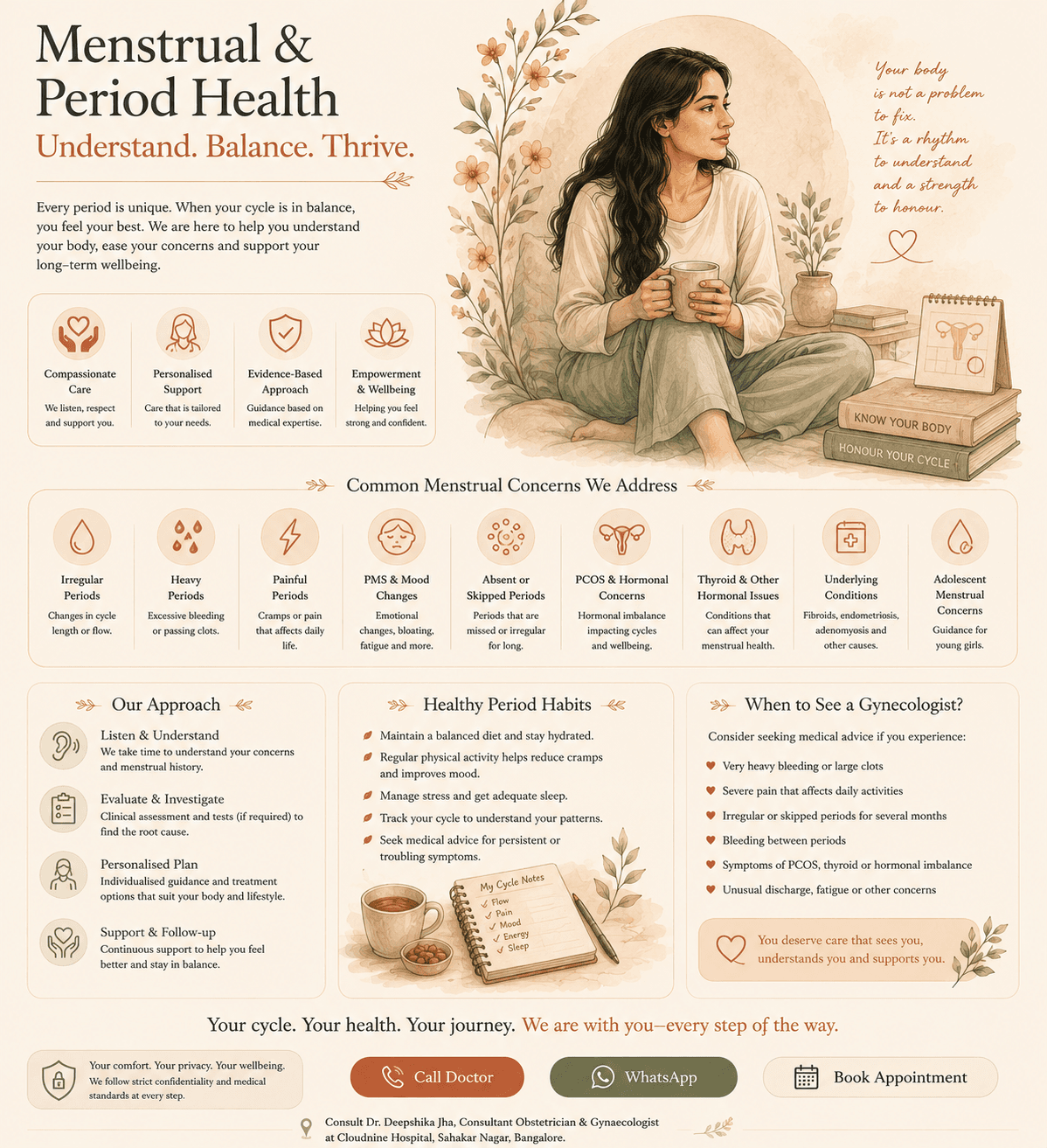
Periods & Hormonal Health
Irregular Periods
Irregular periods can mean cycles that come too often, too rarely, or unpredictably. They are common — and they deserve a thoughtful evaluation rather than being dismissed as stress alone.
Explore →
Periods & Hormonal Health
Heavy Periods
Heavy periods can affect daily life, energy, and confidence. If bleeding feels excessive, lasts too long, or leaves you unusually tired, a gynecological review can help identify causes and options.
Explore →

Gynecology
General Gynecology Consultation
Whether your concern is a new symptom, an ongoing issue, or a routine check-up, a general gynecology consultation offers time to explain what you are experiencing and plan sensible next steps.
Explore →
Preventive Women's Health
Pap Smear & Cervical Screening
Cervical screening helps detect changes early, often before they become serious. If you are due for screening or unsure when to start, a consultation can clarify the right schedule for you.
Explore →
Serving women across North Bengaluru
Consultation is available from nearby neighbourhoods across North Bangalore — without separate clinic addresses in every area.
Hebbal
Women in Hebbal and nearby North Bangalore neighbourhoods often look for a gynecologist who listens carefully and explains options clearly. Dr. Deepshika Jha consults at Grow and Glow Clinic, Kempapura, Hebbal, offering obstetric and gynecological care for patients across the area.
View area →Sahakar Nagar
Sahakar Nagar and Kodigehalli residents often search for a trusted gynecologist within their neighbourhood. Dr. Deepshika Jha consults at Cloudnine Hospitals, Sahakar Nagar, and also at Grow and Glow Clinic, Kempapura, Hebbal — covering antenatal care, gynecology, and women's wellness.
View area →North Bangalore
North Bangalore spans Hebbal, Sahakar Nagar, RT Nagar, Sanjaynagar, Nagavara, Manyata Tech Park, Jakkur, HBR Layout, and many surrounding neighbourhoods. Dr. Deepshika Jha consults at Grow and Glow Clinic, Kempapura, Hebbal and Cloudnine Hospitals, Sahakar Nagar.
View area →RT Nagar
Dr. Deepshika Jha consults in RT Nagar at Dr. Megha's Baby & Child Care, where she has a dedicated consultation room, a separate consultation service, and her own patient base. Morning and evening slots are available through the week, with Sunday hours as well. During the day she also continues consultations at Grow and Glow Clinic, Kempapura, Hebbal and Cloudnine Hospitals, Sahakar Nagar.
View area →
Appointments
Book a consultation for menopause & midlife health
Request an appointment with Dr. Deepshika Jha for menopause & midlife health consultation in Bangalore — online, by phone, or WhatsApp.
Call or WhatsApp to speak with the clinic. Book an Appointment opens the online request form on this website.
Medical disclaimer
Information on this page is for general education and does not replace an in-person consultation with a qualified medical professional. It is not intended to diagnose, treat, cure, or prevent any condition. Symptoms and treatment options vary between individuals.