Gynecology
Vaginal Itching Care in Bangalore
Vaginal or vulvar itching can be distressing and disruptive. It may relate to infection, skin conditions, hormonal changes, or irritants — and the right treatment depends on identifying the cause rather than repeated antifungal use.
Consultation with Dr. Deepshika Jha at Grow and Glow Clinic, Kempapura, Hebbal and Cloudnine Hospitals, Sahakar Nagar.
Call or WhatsApp to speak with the clinic. Book an Appointment opens the online request form on this website.

Understanding this area of care
A clear overview to help you know what to expect before your consultation.
Itching without discharge may still indicate candida, bacterial vaginosis, or a non-infectious cause such as lichen sclerosus, eczema, or contact dermatitis from soaps or products. Postmenopausal itching may relate to vaginal dryness and atrophy. Examination and targeted testing guide appropriate care.
Symptoms & concerns
Common patterns women describe — though every experience is individual.
- Persistent or recurrent vulvar or vaginal itching
- Burning or stinging sensation
- Redness or changes in vulvar skin appearance
- Itching worse at night or after intercourse
- Itching with or without abnormal discharge
Possible causes & context
Helpful background — a consultation helps clarify what applies to you.
- Candida (yeast) infection
- Bacterial vaginosis or other infections
- Contact dermatitis from soaps, detergents, or products
- Lichen sclerosus or other vulvar skin conditions
- Vaginal atrophy after menopause
When should you seek care?
If any of the following apply, it is worth arranging a consultation.
- Itching persists beyond a few days or keeps returning
- Over-the-counter antifungal treatment has not helped
- Skin changes, cracks, or white patches are visible
- Itching interferes with sleep or daily comfort
- Itching occurs with pain, bleeding, or urinary symptoms
What a consultation may involve
Every visit is tailored — this is a general guide to what may be discussed.
Detailed symptom and product use history
Examination of vulvar and vaginal tissues
Testing for infection when indicated
Assessment for dermatological or menopausal causes
Targeted treatment and skin care guidance
Treatment & management overview
Options depend on your history, examination findings, and preferences.
Antifungal or antibiotic treatment addresses infectious causes. Non-infectious itching may need topical steroids, emollients, elimination of irritants, or hormone cream for atrophy. Lichen sclerosus requires specific long-term management. Repeated self-treatment without diagnosis often prolongs symptoms.
Frequently asked questions
Clear answers to common questions — for personal advice, please book a consultation.
Why does itching return after antifungal treatment?
Why does itching return after antifungal treatment?
Recurrent itching may mean the cause was not candida, or that an underlying factor such as diabetes, antibiotic use, or a skin condition needs attention. Clinical evaluation helps prevent repeated incorrect treatment.
Can menopause cause vaginal itching?
Can menopause cause vaginal itching?
Yes. Lower oestrogen after menopause can cause vaginal dryness and thinning (atrophy), leading to itching and discomfort. Local oestrogen or moisturisers may help when this is the cause.
Could itching be a skin condition and not infection?
Could itching be a skin condition and not infection?
Yes. Conditions such as lichen sclerosus, eczema, and contact dermatitis can cause significant itching without infection. Examination is important because these conditions need specific treatment.
Related services
Gynecology
Vaginal Discharge & Infections
Vaginal discharge is normal for many women, but a change in colour, odour, itching, or discomfort may signal infection or imbalance. Accurate diagnosis matters — treating the wrong condition can delay relief.
Explore →
Periods & Hormonal Health
Menopause & Midlife Health
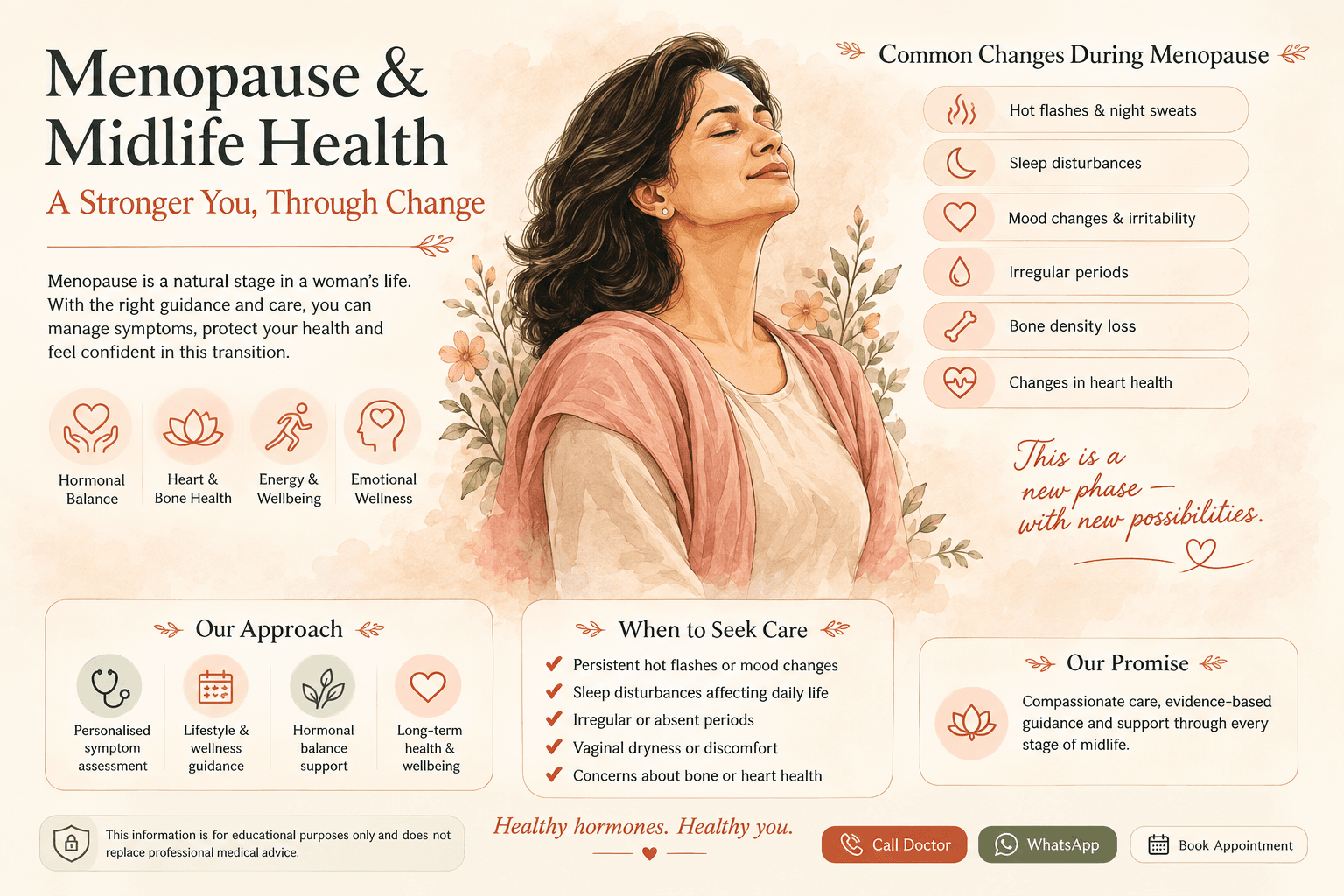
Menopause is a natural transition, but symptoms such as hot flashes, sleep disruption, and mood changes can affect quality of life. Midlife health consultation addresses these changes and broader wellbeing during the perimenopause and beyond.
Explore →
Gynecology
General Gynecology Consultation
Whether your concern is a new symptom, an ongoing issue, or a routine check-up, a general gynecology consultation offers time to explain what you are experiencing and plan sensible next steps.
Explore →
Gynecology
Gynecological Conditions
Pelvic symptoms, abnormal bleeding, and discomfort often have identifiable gynecological causes. Evaluation helps distinguish conditions that need treatment from findings that can be monitored safely.
Explore →
Serving women across North Bengaluru
Consultation is available from nearby neighbourhoods across North Bangalore — without separate clinic addresses in every area.
Hebbal
Women in Hebbal and nearby North Bangalore neighbourhoods often look for a gynecologist who listens carefully and explains options clearly. Dr. Deepshika Jha consults at Grow and Glow Clinic, Kempapura, Hebbal, offering obstetric and gynecological care for patients across the area.
View area →Sahakar Nagar
Sahakar Nagar and Kodigehalli residents often search for a trusted gynecologist within their neighbourhood. Dr. Deepshika Jha consults at Cloudnine Hospitals, Sahakar Nagar, and also at Grow and Glow Clinic, Kempapura, Hebbal — covering antenatal care, gynecology, and women's wellness.
View area →North Bangalore
North Bangalore spans Hebbal, Sahakar Nagar, RT Nagar, Sanjaynagar, Nagavara, Manyata Tech Park, Jakkur, HBR Layout, and many surrounding neighbourhoods. Dr. Deepshika Jha consults at Grow and Glow Clinic, Kempapura, Hebbal and Cloudnine Hospitals, Sahakar Nagar.
View area →RT Nagar
Dr. Deepshika Jha consults in RT Nagar at Dr. Megha's Baby & Child Care, where she has a dedicated consultation room, a separate consultation service, and her own patient base. Morning and evening slots are available through the week, with Sunday hours as well. During the day she also continues consultations at Grow and Glow Clinic, Kempapura, Hebbal and Cloudnine Hospitals, Sahakar Nagar.
View area →
Appointments
Book a consultation for vaginal itching
Request an appointment with Dr. Deepshika Jha for vaginal itching consultation in Bangalore — online, by phone, or WhatsApp.
Call or WhatsApp to speak with the clinic. Book an Appointment opens the online request form on this website.
Medical disclaimer
Information on this page is for general education and does not replace an in-person consultation with a qualified medical professional. It is not intended to diagnose, treat, cure, or prevent any condition. Symptoms and treatment options vary between individuals.